
How This Brand is Cultivating a New Standard for Luxury: Inclusive, Innovative, and Rooted in Responsible Craftsmanship
CFC Member Spotlight: Sakshi Awal of INTGR
Author and interviewer: Stella Hertantyo
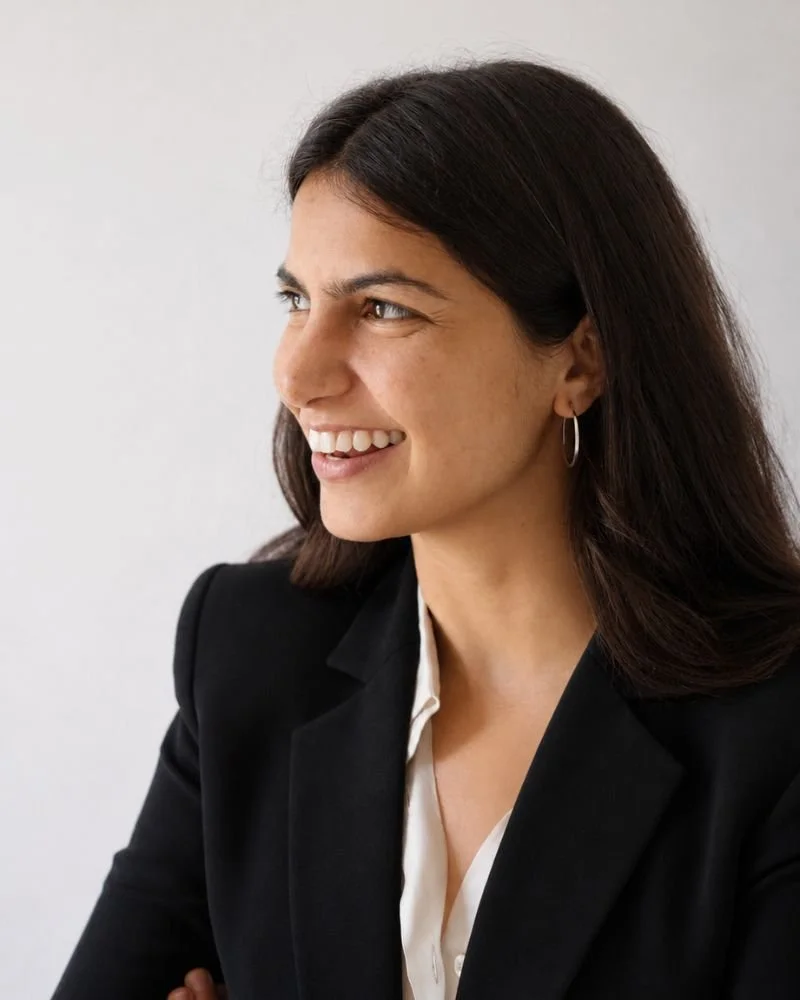
Sakshi Awal is the founder and creative lead of INTGR, a Brooklyn-based accessories brand creating a new standard of luxury through innovative materials, craftsmanship, and longevity.
Originally from India, she studied fashion and textile design in Italy and at the Fashion Institute of Technology before building her career across New York and Berlin. With more than a decade of experience spanning luxury, contemporary, and sustainable fashion, she launched INTGR in 2025 to prove that durability, design, and ethicality can coexist.
Today, she draws on her background in design and product development to create artisan-crafted handbags, made in Italy, from innovative materials that are designed to last. In addition to leading INTGR, Sakshi offers freelance design and consulting services to womenswear brands across Europe and the US. She specializes in collection development, product strategy, and sustainable innovation.
What was the moment you knew you wanted to start INTGR?
It wasn’t one specific moment, but rather a culmination of a longer frustration with how the fashion industry was built around waste. In over 10 years in the fashion industry, I have seen more waste than I can understand. 200 styles, 10,000 pieces, 12 deliveries a year. I was tired of making “stuff”. I wanted to build a more mindful approach to fashion.
Working in slow fashion and learning more about circular fashion gave me the boost I needed to be a part of the change. I knew that this was the mindful approach I was searching for. For the first time in a long time, INTGR is a mindful approach to fashion.
How does your definition of luxury merge with your understanding of sustainability?
I believe in inclusive luxury. It sounds like an oxymoron, because luxury is inherently based on the principle of exclusivity. But I think luxury is a treat and treats look different for different people.
For me, luxury also means investing in one special item — instead of owning several. It’s something you treasure. This idea of separating luxury and disposability is how it connects to sustainability. The more you treasure, love, and hold on to something, the longer its lifespan will be. That’s the best way to be sustainable.
Your focus is on building a product that people love — and also happens to be sustainable. Often, we find that brands lead with sustainability instead of the product. Can you tell us about your choice to flip the script?
Fashion is an emotional choice. It’s a visual and functional expression of yourself. I didn’t want to create a “sustainable version” of something else. I wanted to evoke desire. Focusing on creating beautiful products that have a place in the world — and are good for it at the same time — is what drives me.
A lot of brands choose one or the other. They focus so much on sustainability that they sometimes lose sight of the fact that people want to look good.
We do talk about our sustainable choices, but we make sure that our products are unique and functional. We want our customers to choose us because they can't find these products anywhere else. Sustainability should be the norm in fashion, not a marketing tool. But until we get there, we continue to talk about it.
What is one unique design decision that INTGR has made that isn’t common in other brands?
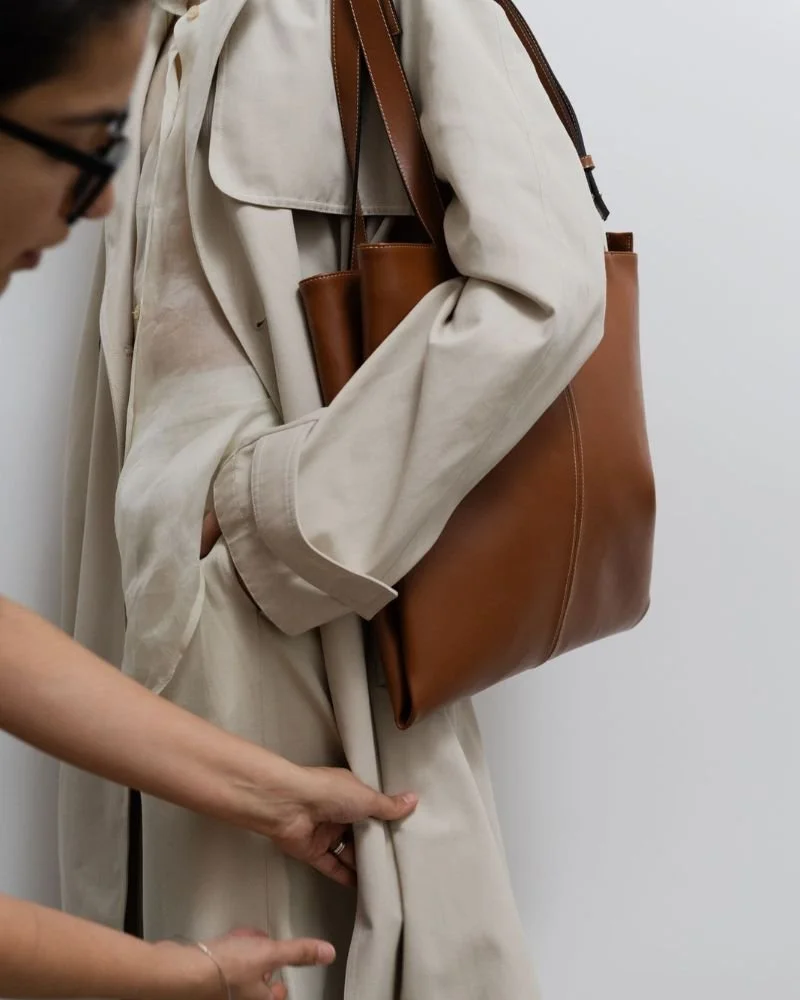
The Double Tote is certainly the most unique bag that didn’t exist until we created it. Built with one large panel of MIRUM® plant-based leather, we created two separate compartments by folding it twice. It’s so simple yet elegant and curious.
In addition to easy organization through the separate compartments, this feature is also great for carrying your coat or scarf at events or when walking around. The double strap offers multiple ways of carrying the same bag — splitting weight on both shoulders instead of carrying a backpack. It's something I haven't seen anywhere else, and it looks so stylish with the metal hardware we used.
I have used the double tote for over a year now — through rain and shine and during my travels. It continues to look as good as new.
What has been the biggest challenge and opportunity when it comes to working with cutting-edge sustainable materials?
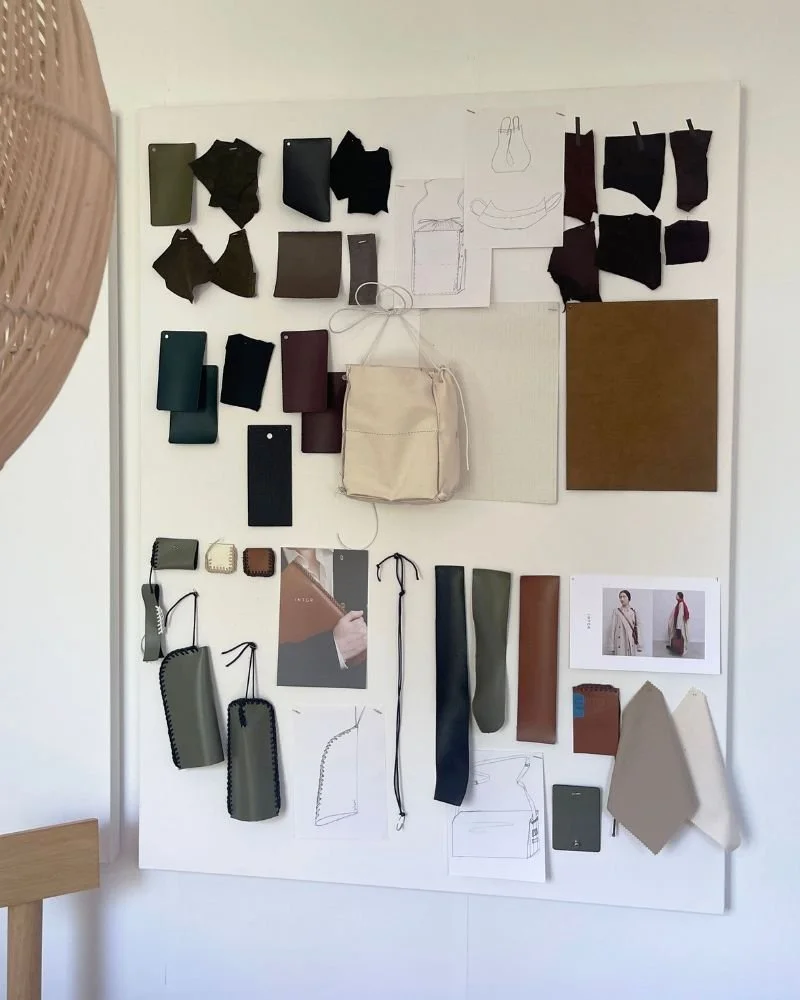
Material innovation is at the core of INTGR. We combine material innovation with artisan craftsmanship. When I was playing with the idea of founding INTGR, I didn’t want to do it with animal leather. But vegan leather was not the answer either.
Using animal leather meant supporting animal cruelty and harmful chemicals entering our waste streams through the dyeing and processing. Using vegan leather meant choosing a material that disintegrated in a year and released microplastics.
Material innovation has opened a new path where we don't need to choose between the two choices. We can have our cake and eat it, too. Some materials we continue to work with have better test results than traditional leather.
I researched a lot to find MIRUM®, which was the only acceptable choice at the time. Now, with more innovative technologies evolving, there are some other great materials we continue to explore.
When choosing a new material, we review a lot of testing to see how it compares to traditional leather and other alternatives. This includes testing tear strength, water resistance, heat resistance, color fastness, and abrasion.
For example, MIRUM® is made to automotive durability standards and stays looking new under high stress and with years of use.
But like everything, they present their own challenges. Factories with years of experience creating quality leather products face challenges adapting to new materials. Although the materials work similarly, not all of them can be constructed in the same way as leather. This requires a lot of attention and experimentation in the development phase of each new product.
On the customer side, people are not always aware that this choice exists and can come with some hesitation. A lot of times, they have already been burned with the idea that vegan leather falls apart quickly, and they place new innovations in the same camp. But once people learn about the alternatives, it excites them, and the goal is to not let them down again.
What role do circularity, repairability, and longevity play in your product design?
Circularity is why INTGR was founded. Circularity begins with material choices, but that’s not where it ends. We integrate it not only in the main material but in each step — while choosing lining, reinforcements, hardware, and other components that go into the bags.
Our lining is traceable deadstock fabric made from natural materials. The reinforcements are recycled. The hardware is brass, which is much easier to recycle than the more commonly used zamak alloy used in most bags. These decisions follow in each step of development.
Thinking of the consumers’ end use when designing and carefully planning each item’s versatility is also part of circular design. A common belief in circularity is that the straps need to be detachable due to the stress applied to them. But, in larger items, the more securely they’re applied to the bag, the more durable they will be. We consciously think of those choices.
The brass studs on the straps of the Double Tote have screw posts in the back so they can be replaced or easily separated from the bag when recycling. During the design process, I consciously think about stress points and repair solutions before anything breaks in the first place.
For our products in circulation already, we’re currently working on some exciting collaborations to increase their lifespan and to close the loop, which I’ll be excited to announce this year.
You’ve chosen to manufacture in Italy. How is this part of INTGR’s design philosophy?
INTGR is built around the idea of combining material innovation with artisan craftsmanship to create long-lasting products. Italy is where traditional, artisan craftsmanship is passed down from generation to generation. I wanted to use the expertise of small, family-owned factories to adopt new materials so they had the best chance of great results.
Also, producing with fair labor conditions and wages is important to me, and the EU has strict laws around this.
In a world that pushes us to accumulate more and more, what is one tip you’d give INTGR customers to step away from this?
Only buy what you truly love. Take time to fall in love, just like any other relationship. Think of how it fits into your life and consider whether it will be an asset or another item in your closet. When I shop, I think of how versatile an item can be. I only buy it if I can’t stop thinking about the item for a few weeks. Usually, I walk away without remorse.
Your business model isn’t fashion’s status quo. It’s slow, considered, and sustainable. What is the biggest lesson you have learned building a business that isn’t following the norm?
In a traditional fashion business model, you make products, you sell them, you put them on sale, and you fill a landfill with what is left — then you start over.
Speaking purely from a business perspective, the biggest lesson I learned in slow fashion is that we still need to compete with these traditional models. We have to come up with ways to tell our story that outweighs the speed and sales of the traditional fashion players.
Why is it important for you to be part of this CFC community of fellow founders and freelancers while building your brand?
Community is everything. Being a solo founder, it helps so much to reach out to follow CFC members for support, advice, or even a matcha with people going through similar challenges. Having a network throughout every part of the industry is so important.
As a designer and product enthusiast, I have learned so much through the weekly calls at CFC — from how to build an email marketing system, to how to reach out to editors, and how to improve SEO to name a few. I often find myself recommending the community to other people on this journey.
Sakshi is one of the 100 members building sustainable fashion businesses inside the Conscious Fashion Collective — a global membership for founders, freelancers, and consultants who are done growing alone. If you're ready to grow with people who get it: