
The Marketing Tools Sustainable Fashion Brands Are Underutilizing for Growth
CFC Member Spotlight: Marie Medvednik of Airwave Creative
Author and interviewer: Stella Hertantyo

Marie Medvednik is the founder of mission-driven marketing agency, Airwave Creative. Originally from Ukraine and now living in Colorado, fashion runs in their family — Marie’s father is a self-taught tailor, and her mother grew up in a family of textile merchants and tailors. In 2015, while pursuing a legal career, Marie built and launched an online storefront for a jewelry brand. This was the moment she knew she wanted to support fashion brands.
Since 2018, they have held two in-house marketing roles at small batch brands and learned a lot about the challenges new fashion businesses face when trying to grow online. When they discovered the power of Meta advertising and email, they knew they wanted to use these tools to help grow the brands they wanted to see more of in the world — those that celebrate their supply chain and want to heal the environment.
Now, she has launched Airwave Creative agency to do just that. Marie’s clients include made-to-order artisanal brands, designer labels, next-gen material apparel startups, and everything in between.
How has your family background influenced your approach to working with fashion brands today?
My dad apprenticed as a tailor, taught himself upcycling, and ended up in geotechnical engineering. These two worlds informed how I conceptualize solutions to this day.
I grew up hearing about the importance of materials, structural integrity, and construction. I learned about the building process, soil readiness in foundations, and the importance of measurement. I still mentally reverse-engineer every challenge without even thinking about it.
My maternal grandmother was born into a wealthy merchant family of Ukrainian textile traders who specialized in cotton and embroidery needlepoint work. They also had their own tailor school, which my great-grandmother managed until the revolution.
Growing up around high-quality natural fabrics, my mom became fluent in discerning fiber blends and taught me everything she knows — from care and repair to durability and lifespan.
For our first seven years in America, my mom worked at an upscale dry cleaner where they gifted abandoned clothes to employees. She brought home a lot of luxury garments. We’d study the labels and construction. As a family, we were always analyzing clothes, design, and craftsmanship.
Working with ethical fashion brands now feels like an extension of the textile fascination I inherited growing up.
Tell us about the moment you knew you wanted to launch Airwave Creative?
In 2020, I got promoted to sales and marketing at alternative fashion house, Five and Diamond, and was introduced to performance marketing. At the time, the company was mostly relying on brick and mortar and special event revenue with underdeveloped e-commerce. This is where I saw a huge opportunity.
We started email marketing and built a sales funnel with paid ads. When the pandemic hit, it proved how perfectly timed our decision had been. These systems and activations enabled us to triple online revenue when the business needed it most. That’s when I realized that when a brand owns its own e-commerce, it can sustain its own growth.
Before starting your agency, you held in-house marketing roles at fashion brands. What was your biggest learning that sticks with you today when helping grow revenue for emerging conscious brands?
I have two. The first lesson has to be the importance of knowing your customer. I’ve learned to understand customer journeys from pain points to desires and objections. This should never be underestimated.
It was while I was working at Levi’s, in their corporate showroom, that this lesson hit home. I trained myself to rethink how I engaged with customers so every interaction turned into consumer research. I brought that into Five and Diamond and studied the correlation between business growth and internal consumer knowledge. Brands that don’t know who they’re selling to end up trying to sell to everyone. That does not end well.
The second lesson is the importance of knowing your numbers — margins, traffic volume by channel, sell-through rate by SKU, and conversion rate. I came into marketing overly focused on aesthetics and visual communication. Everything changed when I got introduced to Meta ads, and I immediately felt the need to understand the role of input costs and metrics in e-commerce.
Without knowing this data, you often miss opportunities for expansion or contraction. For example, if you’re not seeing steady sales from direct or organic SEO or social traffic, then you’re not ready for paid ads. You need to invest in increasing traffic and conversions from owned channels before you invest in activating a paid channel. But if you don’t track traffic and sales by channel, you’d never know this.
Marketing is a term used widely these days. What is the difference between how people understand “marketing” and the revenue systems that you help them build?
Yes, there are a lot of different types of marketing. Marketing is strategic communication that takes place in different contexts, or channels, with different goals. Brand marketing drives alignment and performance marketing drives action.
We combine the two to drive aligned action. We see it’s the best combination for balancing values-based demand generation with driving conversions and cultivating customer relationships.
In the past — before I knew better — I optimized performance by channel. This meant executing on a channel-based strategy, not the entire customer journey — even though I knew its importance. That’s why I’m excited about this journey-driven approach we’ve embedded into the system we build.
If we can craft a unique and resonant conversation starting from the moment someone discovers a brand to the moment they place their second order, then we’re not only growing sales, we’re co-architecting a community. Every touchpoint needs to be one part of that conversation.
Conscious consumers are already using Meta to discover aligned brands, and email is effective at closing sales. So, under one unified communication strategy, the cross-channel integration performs much better.
Our paid media team leverages Meta tech for smaller budgets, and our retention team leads with strategy and design, so we’re able to lead on-brand conversations that create long-lasting impressions and build loyalty.
What is the most common growth struggle you see small fashion brands facing?
1. First, that their pricing is too low for their category and quality. They assume that if they price accurately, their products won’t sell. The truth is, there are customers for every price point as long as value and impact are communicated well. Your prices must have enough margin for the sales and marketing costs. Otherwise, you don’t have a business.
2. Secondly, there is a lack of cohesive storytelling across customer journey stages. Brands need to understand how the narrative changes depending on where the customer is in their journey with your brand. Different tools are suited to different stages of this journey, from acquisition to retention.
For example, email marketing plays a different role than organic social or paid traffic. Without one clear story and journey, customers can feel the disconnect.
3. Thirdly, knowing which order to invest resources and build out marketing channels. The correct order to build out marketing channels is to start with the website, then organic social and SEO, then email, then paid ads. I see stronger client outcomes when there is a big picture understanding of this ecosystem and how each tool and platform works together.
4. Lastly, online stores that are not designed for shopping. If you’re new to the market and expect to earn most of your income from it, then you need to think about it commercially. You need to care about the technology you choose, why you chose it, and which functionalities matter most. You need to match your customer’s experience on your site with the quality of your physical product — clean, smooth, and intuitive.
You also need to create a conversion environment on the site, especially checkout, so it’s easy for new customers to trust you and complete the transaction. It’s hard to grow revenue when your site isn’t set up well. Sadly, no number of ads or emails can help that. Our audits diagnose these bottlenecks, and we work with clients to ensure our recommendations get properly implemented by their site team.
What are the main reasons people scroll past a brand’s ads and emails?
People scroll when there is a mismatch between your audience and what content they want or care about.
All my life, I’ve been thinking about why people buy the clothes they buy. When I was a kid, I asked people about their clothes all the time. Like while waiting for the bus or train, I’d learn a lot about the “who” and the “why” behind people’s fashion choices.
I learned that people care about brands, but a growing number of people care about the impact of clothes. When I brought these insights into my ad and email strategy at Five and Diamond, I helped the team see that it wasn’t about sharing what the brand wants to see. It’s entirely about the customer and communicating their desires and needs in the content — whether that’s emotional or informational.
Once we started writing copy in our clients’ values, lifestyle, and language, Click Through Rates increased immediately. And that’s how you stop the scroll.
Can you share a recent client moment that made you realize the importance of your work?
These past ten years, there have been consistent confirmations that we need more of this work and impact.
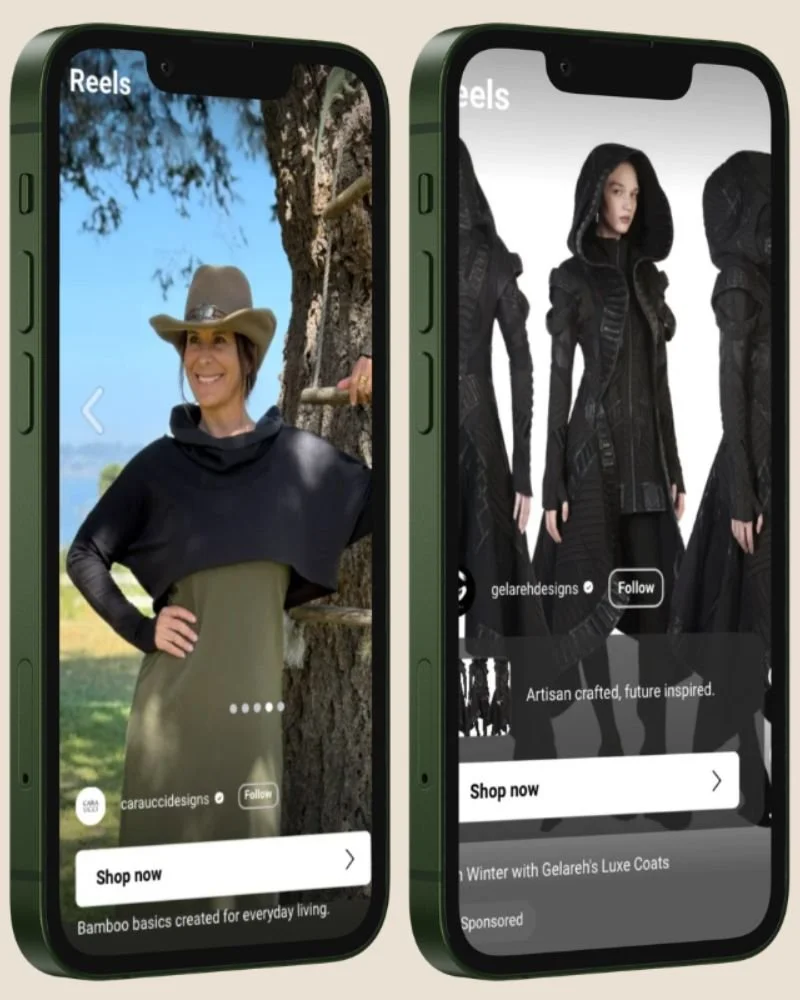
Most recently, one of my clients designs versatile plant-based basics for women over 45. In the customer journey mapping, we extracted pain points, desires, and objections from over 1000 customer reviews, in the customer’s language.
There were hundreds of reviews from first-time customers who are now obsessed. Hundreds mentioned wanting to support ethical fashion. These are women, mostly around 50-60 years old. It was also astounding to see how many older women feel relieved to find natural fiber clothing options that aren’t frumpy, trendy, outdated, or business-y.
Older women whose bodies have changed want to participate in fashion in healthy ways and embrace their youthful selves, while consciously supporting an ethical business. This affirmed to me that the need and opportunity are real.
For a sustainable fashion brand founder who's struggling to grow online and wondering whether they need paid media support, what's the key indicator that it's time to bring in expert help?
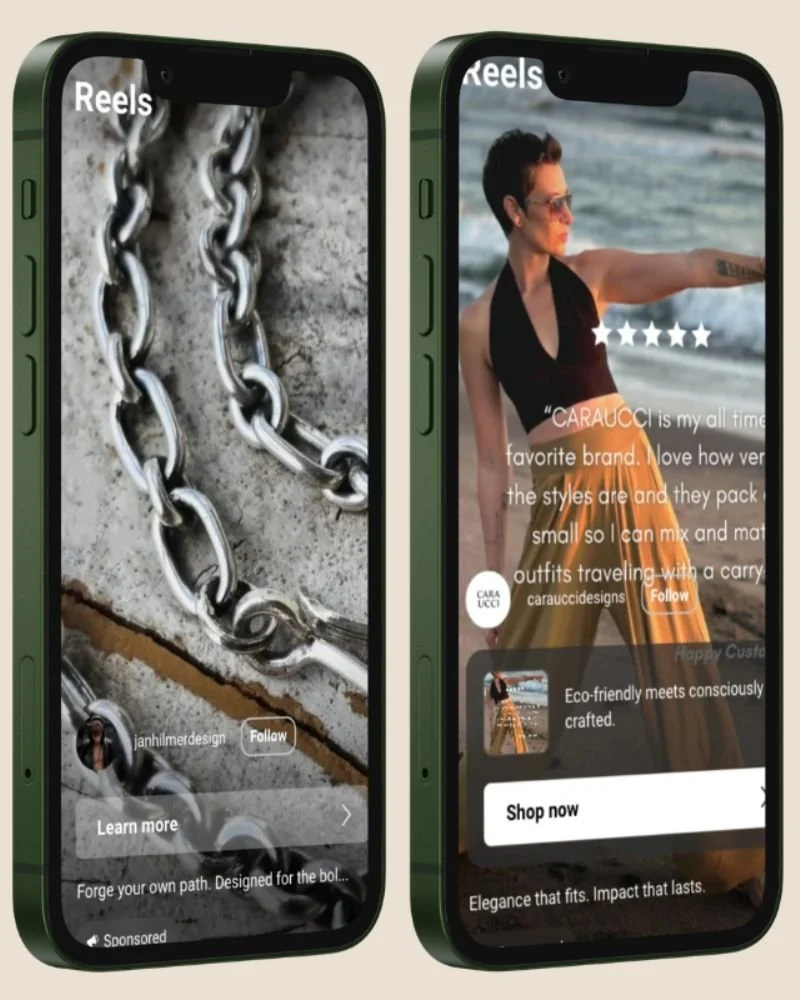
The number one indicator is if they have steady organic traffic — direct, social, or SEO — and sales from that traffic, even if it’s not very high yet. This indicates market interest, proof of concept, as well as site traffic that can be retargeted with ads and nurtured with email.
Having a social media strategy going and actively sharing engaging and collaborative content also gets you closer to readiness. For Meta, regular organic activity helps the platform collect data for targeting, so if this is activated, then you’re ready for paid.
If you’re in a low competition material or category, you can get great results from paid media. Meta is good at finding niche customers for niche products.
Why do you believe that growing emerging ethical fashion brands now is more important than ever?
The number of conscious consumers in the world is growing. There is a lot of trust redistribution happening right now. From luxury fashion to “sustainable” fashion giants, brands are trading core values for valuation — and conscious customers are looking for alternatives. This presents an opportunity for new brands competing on price, design, materials, and construction, but building with operational integrity and longevity in mind.
It’s a competitive industry, and it takes foundation-building, strategy-execution alignment, resources, and sheer guts to enter and compete in this market. That’s why those conscious fashion brands that are truly devoted deserve our support and investment — from growth marketers to impact investors alike.
Why is it important for you to be part of this CFC community of fellow founders and freelancers while building your own business?
Industry transformation comes from movements. Movements from fellowships. To redesign the fashion industry, we need global fellowships like CFC where everyone shares a similar vision for the industry's future and is building toward it in their own way, from different angles. That kind of alignment has the power to affect real change.
The value from the support available is unmatched. For example, I've received invaluable web copy feedback that I can feel in my bones comes from people who want me to succeed.
When you're creating something that doesn't exist, there are no blueprints — you're pioneering new categories. It's great but it gets lonely. A sense of community is hard to come by. Joining CFC is one of the best investments I ever made in my business.
Marie is one of the 100 members building sustainable fashion businesses inside the Conscious Fashion Collective — a global membership for founders, freelancers, and consultants who are done growing alone. If you're ready to grow with people who get it: